
Review growth evidence
Funnel data, positioning, channels, team rhythm, and what's been tried. Plain-English view of where pipeline breaks.
How it works
Most consultancy engagements are a black box. This one isn't. Here's exactly what happens week by week, what the cadence looks like, and what you walk away with.
First 30 days
Same sequence on most engagements, emphasis shifts with your bottleneck.
Funnel data, positioning, channels, team rhythm, and what's been tried. Plain-English view of where pipeline breaks.
Reset priorities around the binding constraint, positioning, acquisition, conversion, reporting, or ownership.
Channel hierarchy, reporting rhythm, campaign priorities, documented so the team can execute.
Weekly growth meeting format, owners, and decision log so momentum doesn't depend on the founder alone.
The operating system
A single picture of how growth inputs flow through diagnosis, experiments, and cadence into assets the team can run without founder heroics.
The engagement rhythm
Find the real constraint across ICP, positioning, funnel, channels, reporting, and team cadence. Ends in a plain-English bottleneck statement everyone agrees on.
Turn the decision into pages, campaigns, workflows, dashboards, and a weekly rhythm. Existing assets get rewired before new ones are built.
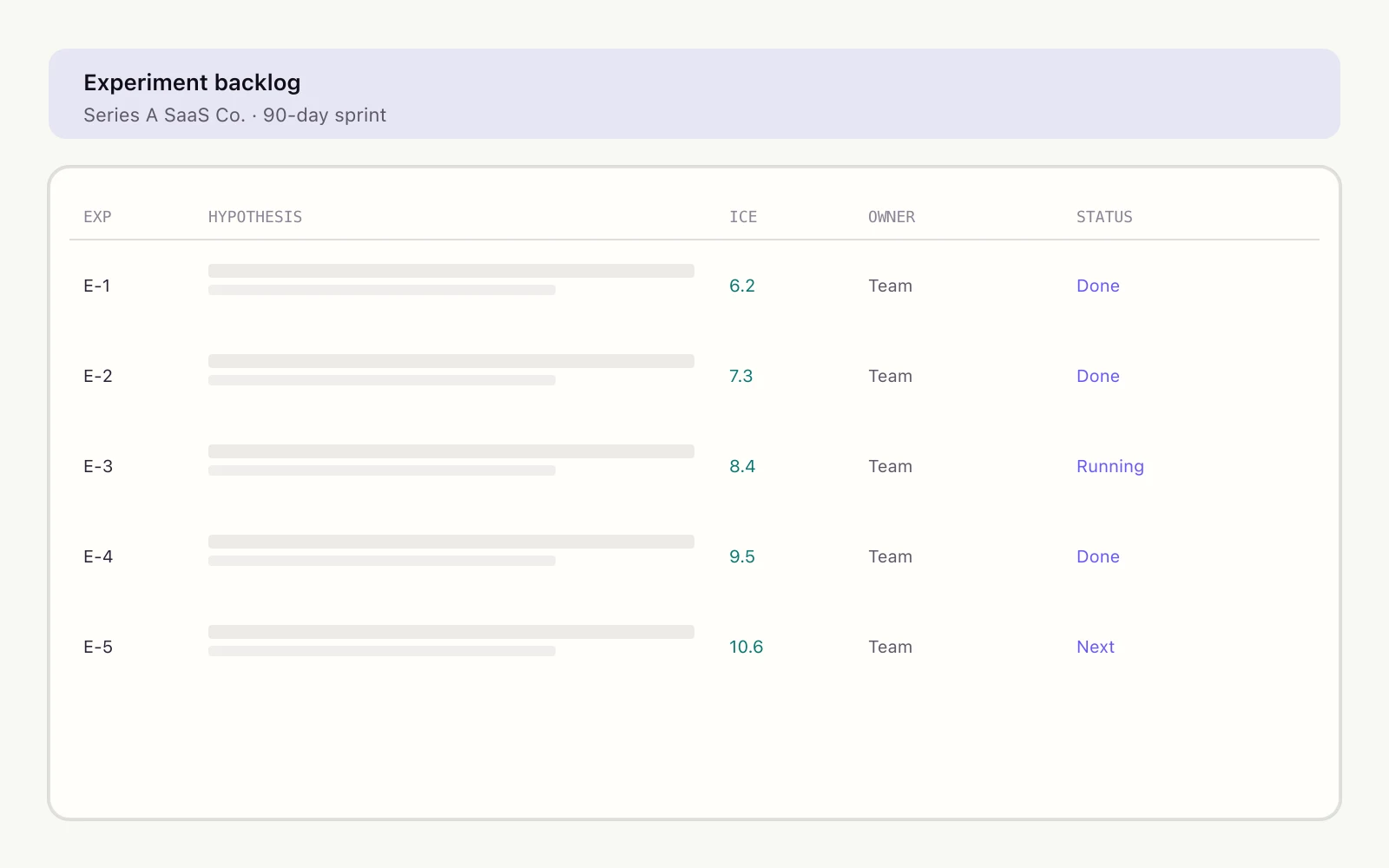
Run focused experiments with clear hypotheses, owners, and decision rules. ICE-scored, sequenced, and cut fast if they don't move the metric.
Document the system so the founder, team, and vendors can keep running it. Handover doc, dashboard read-me, vendor SLAs, decision rules, all written.
Inside two of the phases
Build turns the strategy into assets and rhythm. Transfer makes sure the rhythm survives without us.
Build
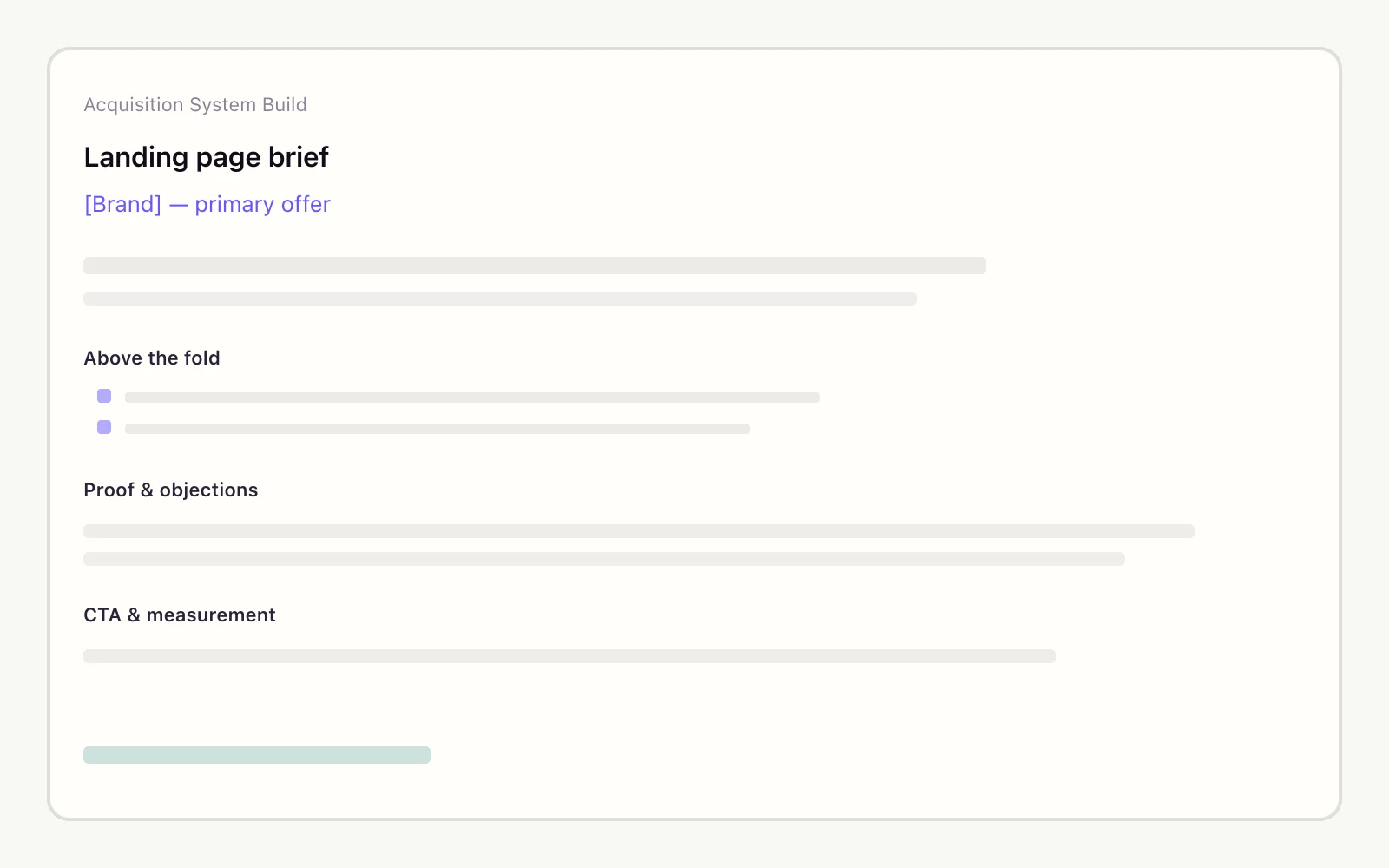
We build the practical pieces: positioning, landing pages, campaign briefs, reporting, AI workflows, and the meeting cadence that keeps learning moving.
Transfer
We document decisions, workflows, reporting, meeting cadence, and handoff rules so the growth function gets stronger after the engagement ends.
Deliverables
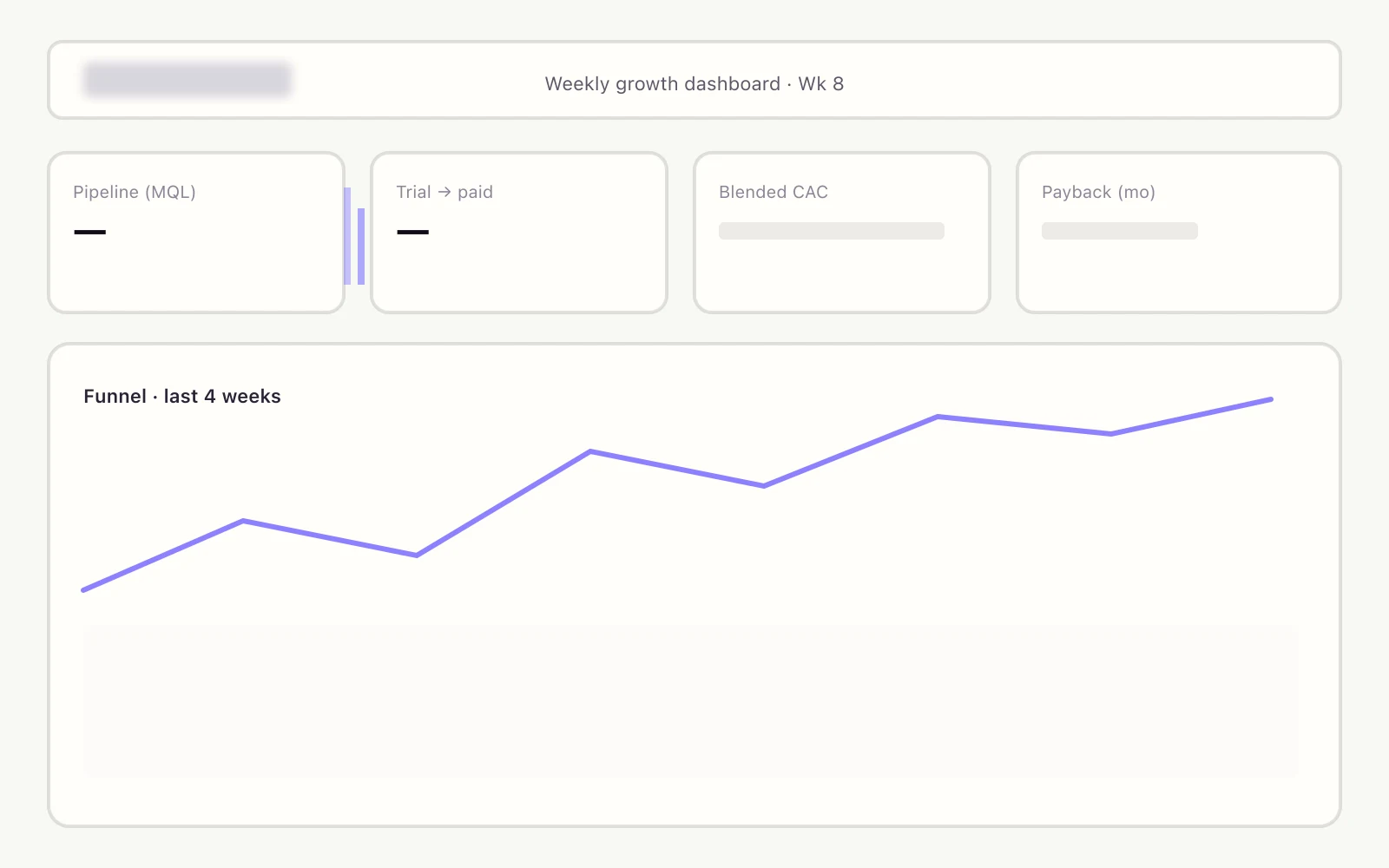
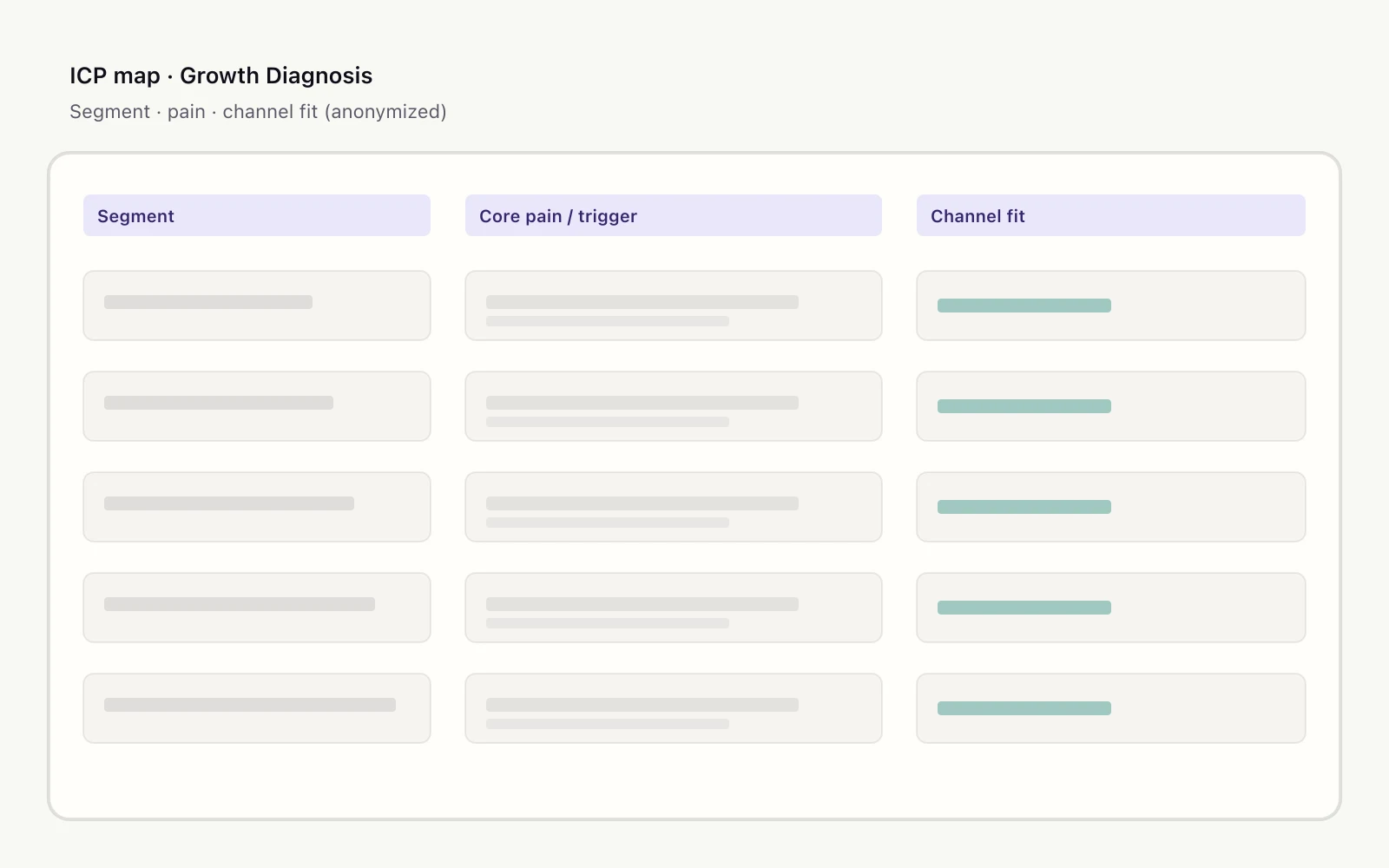
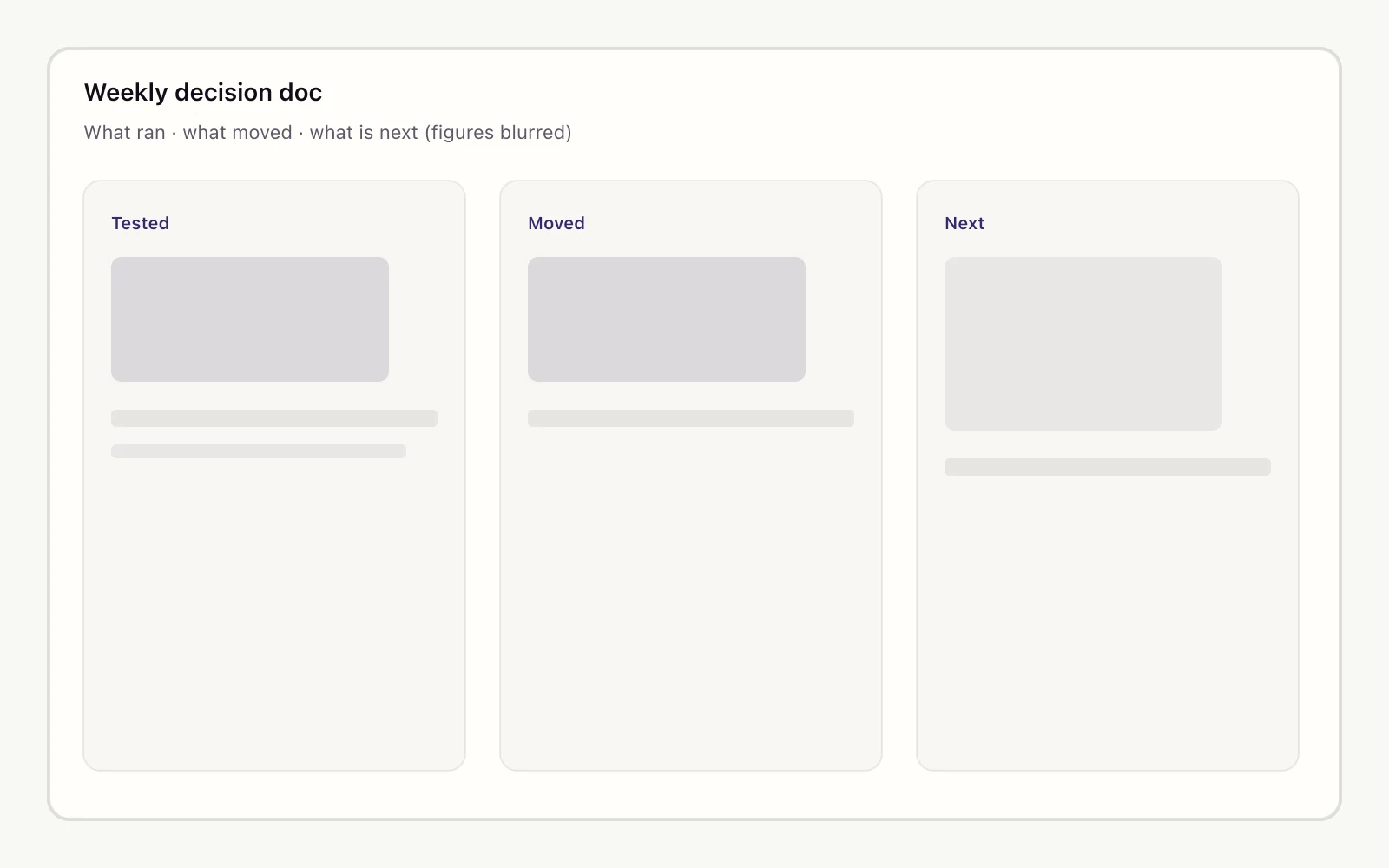
Representative, anonymized snapshots of what ships inside an engagement, not client-specific screenshots. Exported at 2× for sharp displays; WebP for load time.
Weekly cadence
No mystery, no Friday-afternoon "what's been happening?" calls. The week is the same shape, every week.
Mon
Weekly priorities locked. Owners and decision rules attached to every test in the backlog.
Tue–Thu
Execution. Briefs ship, copy ships, pages ship. Async on Slack. Daniel is in the build, not just review.
Fri
Numbers review against the scorecard. What's working, what to scale, what to kill. Decisions logged.
What you get
Everything below is something the team can edit, run, or hand to a vendor on day 91 without us in the room.
FAQ
Diagnosis and sprint windows vary by scope. The four-phase shape is consistent: diagnose, build, test, transfer, but timelines flex with team capacity and channel complexity.
Common. The weekly rhythm includes directing agency work inside one system: priorities, briefs, and stop/scale decisions, not competing channel plans.
Written decision rules, dashboard ownership, meeting format, and vendor SLAs so the team can run the rhythm without daily operator dependency.
Related reading
Next step
Bring the current growth picture. 20 minutes. Plain English.
Different stages need different evidence, systems and support. Choose the description that sounds closest to your company right now.
You have customers or early traction, but growth remains inconsistent, founder-led or difficult to reproduce.
Identify the binding growth constraint and build a repeatable learning and acquisition rhythm.